
14K Gold vs 18K Gold: Which Is Better for Jewelry?
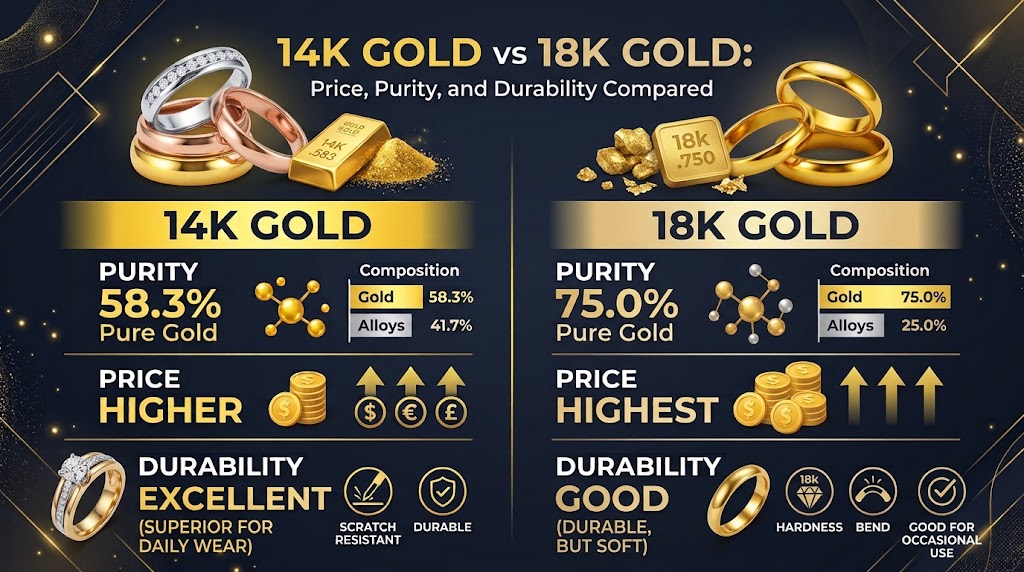
Choosing between 14K and 18K gold can be confusing, especially when both are popular choices for rings, chains, bracelets, and other jewelry. The main difference comes down to how much pure gold each one contains.
14K gold contains about 58.3% pure gold, while 18K gold contains 75% pure gold. That higher gold content makes 18K gold more valuable by weight, but 14K gold has an advantage when it comes to strength and everyday wear.
14K Gold vs 18K Gold at a Glance
| Feature | 14K Gold | 18K Gold |
|---|---|---|
| Gold Purity | 58.3% pure gold | 75% pure gold |
| Common Hallmark | 14K or 585 | 18K or 750 |
| Gold Content | Lower | Higher |
| Price | Usually more affordable | Usually more expensive |
| Durability | More resistant to everyday wear | Softer than 14K |
| Color | Warm yellow | Richer, deeper yellow |
| Everyday Wear | Excellent | Good, with more care |
| Intrinsic Gold Value | Lower for the same weight | Higher for the same weight |
| Best For | Everyday jewelry and value | Higher purity and premium jewelry |
What Is the Difference Between 14K and 18K Gold?
Gold karat tells you how much pure gold is present in an alloy. Since pure gold is 24 karats, 14K and 18K represent different proportions of gold and other metals.
14K gold has 14 parts gold out of 24, giving it a purity of about 58.3%. The remaining 41.7% consists of other metals that help make the jewelry harder and more durable.
18K gold has 18 parts gold out of 24, giving it a purity of 75%. Only about 25% consists of other metals.
This difference affects almost everything people consider when buying gold jewelry, including price, color, softness, and gold value.
14K vs 18K Gold Purity
If you’re mainly interested in purity, 18K gold is the clear winner.
14K gold contains approximately 58.3% pure gold and is commonly marked 14K or 585. The 585 marking represents roughly 585 parts of gold per 1,000 parts of the alloy.
18K gold contains 75% pure gold and is commonly marked 18K or 750.
So, for the same weight, an 18K gold item contains more actual gold than a 14K item.
Which Is More Expensive: 14K or 18K Gold?
18K gold is generally more expensive than 14K gold because it contains a higher percentage of pure gold.
If two pieces weigh the same, the 18K piece contains more gold and therefore has a higher underlying gold value. However, the final jewelry price can vary depending on the design, craftsmanship, brand, gemstones, and other factors.
This means a higher-karat piece isn’t necessarily more expensive simply because of its design. A large or detailed 14K piece can still cost more than a small and simple 18K piece.
Which Is More Durable?
When it comes to durability, 14K gold generally has the advantage.
14K gold contains more alloy metals than 18K gold. These additional metals can make the alloy harder and better suited to regular contact and wear.
18K gold is softer because it contains more pure gold. It can still be used for everyday jewelry, but it may require a little more care to help prevent scratches and damage.
For jewelry that gets heavy daily use, such as a ring worn constantly, 14K gold can be a practical choice.
14K Gold vs 18K Gold Color
The difference in gold content can also affect the appearance.
18K yellow gold generally has a richer and deeper yellow color because it contains more pure gold. 14K yellow gold usually has a slightly lighter and less intense gold tone.
The exact appearance can vary depending on the other metals used in the alloy.
If you want a noticeably rich gold appearance, 18K can be appealing. If you prefer a more subtle yellow tone, 14K may suit you better.
Is 18K Gold Good for Everyday Wear?
Yes, 18K gold can be worn every day, but it is worth being more careful with it.
Its higher gold content gives it a richer appearance and makes it more valuable by weight, but it also makes the metal softer than 14K gold.
For jewelry that doesn’t receive heavy impact, 18K can work very well. Rings, earrings, necklaces, and bracelets can all be made from 18K gold.
However, if the piece is exposed to frequent knocks, scratches, or rough activities, 14K may be the more practical option.
Is 14K Gold Better for Everyday Jewelry?
For many people, 14K gold offers a useful balance between purity, durability, appearance, and price.
It contains more than half pure gold while retaining enough alloy metals to make it relatively strong for regular use. This makes it a popular option for jewelry that people wear frequently.
If you want something that looks like genuine gold but don’t want to pay the higher price of 18K gold, 14K can be a good middle ground.
14K vs 18K Gold: Which Should You Choose?
The better option depends on what you value most.
If higher gold purity and a richer color are your priorities, 18K gold may be the better choice. It contains 75% pure gold and has a higher gold value for the same weight.
If you care more about durability, affordability, and everyday use, 14K gold may make more sense. It still contains a substantial amount of pure gold while being harder than 18K.
In simple terms:
- 14K gold: More durable, usually more affordable, and ideal for frequent wear.
- 18K gold: Higher purity, richer color, and higher gold value per gram.
- For everyday jewelry: 14K is often the more practical option.
- For higher purity: 18K is the better choice.
Does 18K Gold Hold More Value Than 14K Gold?
For the same weight, 18K gold generally has a higher intrinsic gold value because it contains 75% pure gold compared with about 58.3% in 14K gold.
For example, one gram of 18K gold contains approximately 0.75 grams of pure gold, while one gram of 14K gold contains approximately 0.583 grams of pure gold.
The actual selling price of jewelry can be different from its calculated gold value. Buyers may also consider the item’s condition, craftsmanship, gemstones, market conditions, and refining costs.
So if you’re checking the value of an existing piece, its karat and weight are important starting points.
14K vs 18K Gold: Which Is Better?
Neither option is automatically better in every situation.
14K gold is usually the better all-around choice for everyday jewelry because it combines good gold content with greater durability and a lower price.
18K gold is better if purity and a richer gold appearance matter more to you. Its higher gold content gives it a greater intrinsic value by weight, although it is softer and usually costs more.
Before buying either one, consider how often you’ll wear the jewelry, your budget, and whether you care more about durability or gold purity.
Final Thoughts
The biggest difference between 14K and 18K gold is the amount of pure gold they contain. 14K gold is about 58.3% pure, while 18K gold is 75% pure.
That extra gold makes 18K more valuable and gives it a richer appearance, while 14K’s additional alloy metals make it harder and generally more affordable.
If you’re looking for a balance of price, durability, and gold content, 14K is a strong everyday option. If your priority is higher purity and a richer gold color, 18K may be worth the extra cost.

