
14K Gold vs 24K Gold: Purity, Price, and Durability
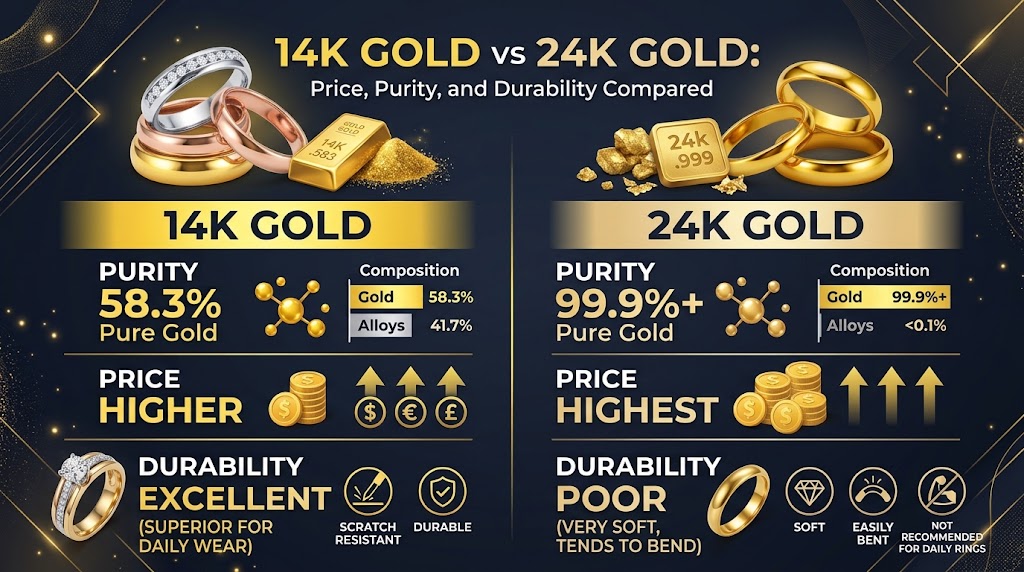
If you’re comparing 14K and 24K gold, the biggest difference is gold purity. 24K gold is nearly pure gold, while 14K gold contains a mix of gold and other metals. That difference affects the price, color, strength, and how each type is used.
24K may sound like the obvious winner because it has more gold, but that doesn’t mean it’s the best choice for every piece of jewelry. For everyday use, 14K gold can actually be more practical.
14K Gold vs 24K Gold at a Glance
| Feature | 14K Gold | 24K Gold |
|---|---|---|
| Gold Purity | 58.3% pure gold | 99.9% pure gold |
| Common Hallmark | 14K or 585 | 24K or 999 |
| Other Metals | About 41.7% | Very little |
| Price | Usually lower | Usually higher |
| Durability | More durable | Softer |
| Color | Warm yellow | Deep, rich yellow |
| Everyday Jewelry | Excellent choice | Less practical |
| Gold Content | Lower | Highest |
| Best For | Rings, chains, and daily-wear jewelry | Investment, bars, coins, and high-purity gold |
What Is the Difference Between 14K and 24K Gold?
The main difference is the amount of pure gold in each type.
14K gold contains 14 parts pure gold out of 24, which works out to about 58.3% gold. The rest is made from other metals that help improve the strength and durability of the material.
24K gold contains 24 parts gold out of 24 and is considered pure gold, although commercial 24K gold is commonly marked 999 or 999.9 depending on its purity standard.
Because 24K gold contains much more actual gold, it has a higher gold value by weight.
14K vs 24K Gold Purity
If purity is your main priority, 24K gold clearly wins.
14K gold is 58.3% pure gold, while 24K gold is approximately 99.9% pure. This is why you’ll often see 14K jewelry marked 585 and high-purity 24K gold marked 999.
The extra metals in 14K gold aren’t necessarily a bad thing. They make the metal stronger and more suitable for jewelry that is worn regularly.
So the better option depends on what you’re buying. If you want the highest possible gold content, 24K is the better choice. If you want a balance between gold content and durability, 14K can be more practical.
Which Is More Expensive: 14K or 24K Gold?
24K gold is normally more expensive per gram because it contains much more pure gold.
For example, if two pieces have exactly the same weight, the 24K piece contains significantly more gold than the 14K piece. That difference is reflected in its underlying gold value.
However, the retail price of jewelry isn’t based on gold content alone. Design, craftsmanship, brand markup, gemstones, and other costs can also affect the final price.
This is why a 14K gold ring can sometimes cost more than a simple 24K gold item even though 24K gold has a higher gold value per gram.
Which Is More Durable?
This is where 14K gold has a major advantage.
Pure gold is naturally soft. Because 24K gold contains almost no alloy metals, it can scratch, bend, or lose its shape more easily when exposed to everyday wear.
14K gold contains a significant amount of alloy metals, making it harder and more resistant to normal wear.
That’s one reason 14K gold is commonly chosen for rings and other jewelry that people wear regularly.
14K Gold vs 24K Gold Color
The two types can also look noticeably different.
24K gold has a deep, rich yellow color because of its very high gold content. 14K yellow gold generally has a softer or slightly lighter yellow appearance because the other metals in the alloy affect its color.
The exact appearance of 14K gold can vary depending on which metals are used in the alloy.
If you prefer the classic rich yellow appearance associated with very high-purity gold, 24K may appeal to you more. If you prefer a more subtle color for everyday jewelry, 14K can be a better fit.
Is 24K Gold Good for Jewelry?
24K gold can certainly be used for jewelry, but its softness makes it less practical for pieces that receive a lot of daily wear.
A 24K gold piece can be more vulnerable to scratches and bending, especially when compared with lower-karat gold alloys.
It is more commonly associated with high-purity gold products such as coins and bars, although 24K jewelry is also available in some markets.
For a ring or bracelet that you plan to wear every day, durability is worth considering alongside purity.
Is 14K Gold Better for Everyday Wear?
For everyday jewelry, 14K gold is often the more practical option.
Its combination of gold and alloy metals gives it a good balance between purity, strength, appearance, and price. It can handle normal daily use better than very soft 24K gold.
This makes 14K gold popular for items such as engagement rings, wedding bands, chains, earrings, and bracelets.
Of course, proper care still matters. Even durable gold jewelry can become scratched or damaged over time.
14K vs 24K Gold: Which Should You Choose?
The right choice depends on your priorities.
Choose 24K gold if your main goal is maximum gold purity and a rich yellow appearance. It can also be attractive if you’re buying high-purity gold for investment purposes.
Choose 14K gold if you want jewelry that can handle regular wear while still containing a substantial amount of pure gold.
In simple terms:
- 14K gold: Lower purity, stronger, usually more affordable, and practical for everyday jewelry.
- 24K gold: Much higher purity, softer, usually more expensive, and better suited to high-purity gold products.
- For daily jewelry: 14K is generally the more practical choice.
- For maximum purity: 24K is the clear winner.
Does 24K Gold Hold More Value Than 14K Gold?
For the same weight, 24K gold generally has a higher intrinsic gold value because it contains much more pure gold.
For example, one gram of 24K gold contains almost one gram of pure gold, while one gram of 14K gold contains about 0.583 grams of pure gold.
That doesn’t mean a 14K jewelry item has little value. Its value depends on the amount of gold it contains, its weight, the current gold market price, and potentially other factors such as craftsmanship and gemstones.
Final Thoughts
The choice between 14K and 24K gold comes down to purity versus practicality.
24K gold offers the highest gold content and a rich yellow color, but its softness makes it less suitable for jewelry that takes a lot of daily wear. 14K gold contains less pure gold, but its added alloy metals make it stronger and more practical for everyday pieces.
If you’re checking the value of a gold item, start with its karat, weight, and current gold price. These give you a much better idea of how much actual gold the piece contains.

